By George T Hilliard

When dealing with Industrial IoT (IIoT) networks, particularly for manufacturing systems and utility grids, each connected device must typically execute multiple processes, such as data collection, analytics, and inference (machine decision making).
One of the critical aspects of managing industrial environments is to control when and how each IoT device receives which piece of data. Any lag in data transmission may lead to a delay in data processing, decision making, and execution. For example, looking forward to the future, autonomous vehicles could receive road condition updates earlier and make an analytics-based decision to slow down. As a result, they could cause accidents or traffic tie-ups with vehicles that have not received the same update and reacted accordingly.
In a smart factory, if some robots on the assembly line collect certain data earlier than others, they may cause production problems or even accidents when machines are not synchronized. Therefore, IoT devices must keep up with each other by receiving the same information at the same time.
Timing is Everything
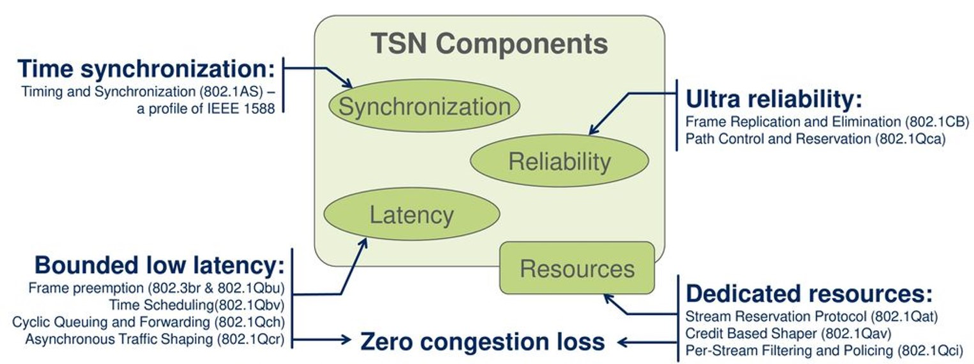
Time-sensitive networking (TSN) can guarantee the uniform delivery of time-stamped data packets. In addition, TSN will ensure data integrity, minimize transmission latency, and reduce system faults.
The success of TSN relies on the Precision Time Protocol (PTP), derived from IEEE standard 1588, which synchronizes the clocks on in-network devices to the master clock. TSN also depends on high-performance reliable network switches, which connect different in-network equipment via Ethernet cables.
A network switch can receive, process, and forward data packets. Managed network switches can be configured to enable remote management, provide an interface for line commands, or manage data traffic to reduce packet loss and latency.
To withstand extreme and/or wildly fluctuating temperatures, as well as shock and vibration that can be present in an IIoT environment, network switches should be ruggedized, meaning that they’re built to higher environmental standards, possibly with fans and more robust packaging. System developers could also consider a deployment that takes advantage of fanless heat dissipation to avoid drawing in external dust or moisture.
Operation in remote or hard to reach locations dictates that IIoT network switches be reliable and fault-tolerant. On top of these requirements, network switches still need to deliver a large volume of time-critical data packets quickly, with minimal data loss, and on a continual basis. Lastly, since the switches could be handling massive amounts of data, they require features that protect the data from potential hackers.
Most WINSYSTEMS embedded computers support TSN, and our Engineers can assist you in choosing the best model and configuration for your time-sensitive application.