
Since the embedded computing industry’s inception, the trend has been toward achieving smaller size and weight with higher performance under lower power use. Sometimes these size, weight and power (SWaP) advances work together to drive adoption of new technological advancements, but usually a choice must be made to prioritize size versus power and performance. For example, it’s not uncommon for smaller size components to consume less power. However, higher performance often results in more power being consumed. And higher power, in less area, can be detrimental because there is less space to dissipate the heat that is generated.
The industry has come up with several physical form factor specifications, for which the application usually dictates the choice. Each carries different dimensions, thereby allowing the board vendor to pack on as much as possible within the constraints of the performance and power envelopes. Those form factors covered in this article all feature the small size, rugged design, and extended operational temperature to serve industrial IoT, industrial control, transportation, Mil/COTS, and energy market applications.
This blog presents the Pico-ITX, 3.5-inch, and PC/104 form factors. Pico-ITX originated from a VIA Technologies initiative and has been adopted by numerous embedded SBC vendors. At board dimensions of 100 mm by 72 mm, it takes half the area of the Nano-ITX’s 120 mm square. The original ITX standard was released more than 20 years ago starting with the Mini-ITX form factor and has evolved to include Nano-ITX and Pico-ITX.
The 3.5-inch single-board computer (SBC) measures 146 mm by 102 mm (5.75 by 4 inches). Why is it called 3.5-inch, you ask? That’s because it’s the size used to control a 3.5-inch disk drive. Finally, the PC-104 form factor measures in at 116 mm by 109 mm (4.55 by 4.28 inches).

The SBC35-427, conforming to the 3.5″ form factor, is a great fit for industrial IoT applications thanks to its combination of off-the-shelf functionality with multiple expansion and configuration options. It too is designed around an Intel Apollo Lake-I E3900 series processor. As evidenced by the rich feature set of the SBC35-427, new technologies continue to be added while maintaining the same board area.

Pico-ITX is an ultra-compact solution for designers of miniature embedded systems. The WINSYSTEMS ITX-P-3800 is a good example of an SBC that fits the Pico-ITX form factor and pack lots of features. Thanks to its many I/O and standard industrial connectors, the ITX-P-3800 is a great choice for applications requiring low power and the performance of the Apollo Lake processor while still fitting in a small form-factor package. Such applications include UAV, energy, medical diagnostics, and industrial control.
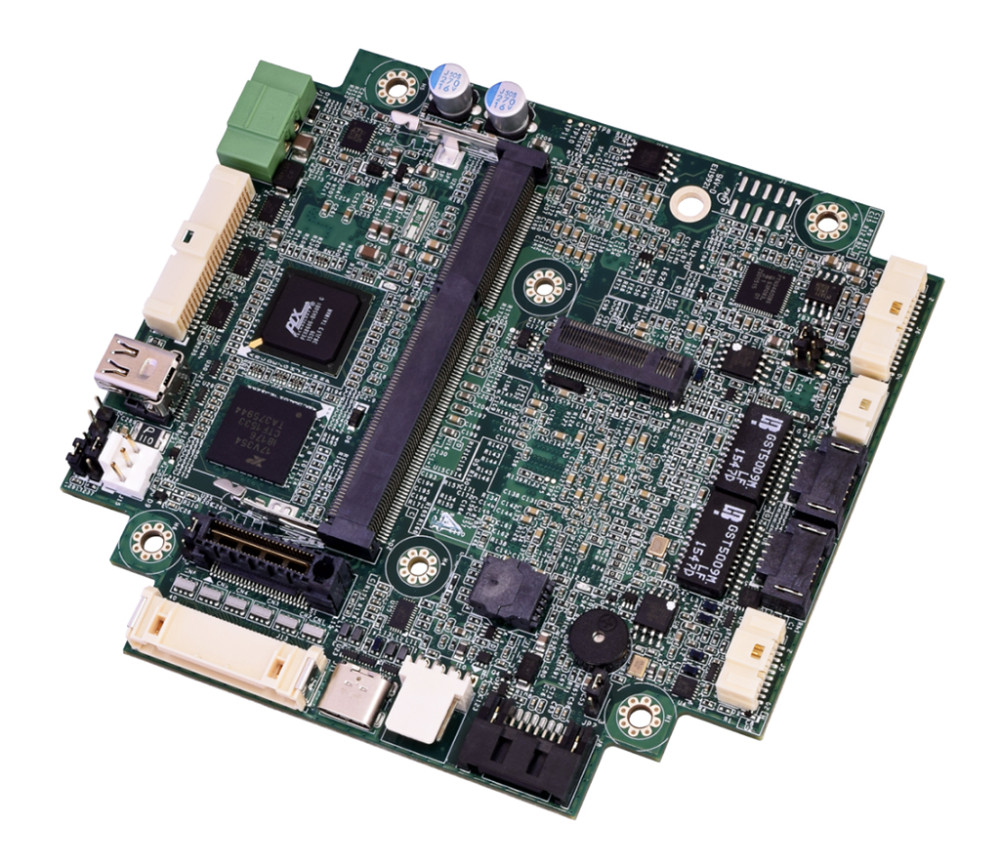
WINSYSTEMS’ PX1-C415 is an example of that PC/104 form factor SBC. PC/104 has stood the test of time, so designers have a high level of comfort when integrating it. Even after the adoption of newer bus interfaces, the PC/104 form factor remains a strong building block platform. For example, the PXI-C415, featuring the Intel Atom® Apollo Lake-I SoC processor, includes the PCIe/104 OneBank expansion connector for high-speed, low-cost PCIe connectivity and performance.
The bottom line is that you have form factor options for COTS (commercial-off-the-shelf) SBCs, and that’s a good thing for application and device designers who need rugged embedded computing solutions. Consult an embedded computing expert like WINSYSTEMS to determine which SBC is right for you based on size, power consumption, and performance. Easily start your selection using the features filter on the Product catalog.